Beyond the Warning: What Students Need to Know When Hazing Concerns Arise
Anti-hazing guidance highlights why immediate safety, evidence preservation, and clear campus processes matter to
Press Release Disclaimer: This is a press release distributed through the XPR Media network. It has not been independently verified by our newsroom.
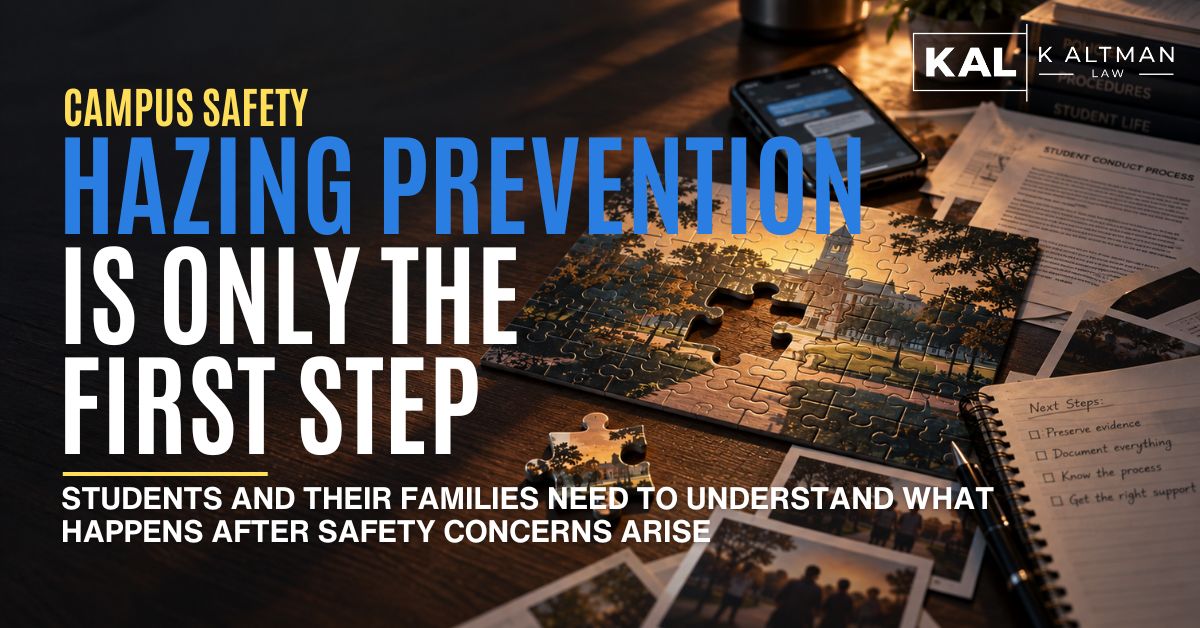

Anti-hazing guidance highlights why immediate safety, evidence preservation, and clear campus processes matter to students and families.
FARMINGTON HILLS, MI, UNITED STATES, September 24, 2026 /EINPresswire.com/ — Penn State’s September 18 reminder for National Hazing Prevention Week emphasizes that hazing is prohibited by university policy and can involve athletic teams, clubs, service organizations, fraternities, sororities, and similar groups—not only traditional Greek-letter organizations. You can read about it here.
The university states that hazing may include intentional physical, mental, or emotional acts that pressure or coerce a student into harmful, humiliating, illegal, or unsafe conduct connected to joining, remaining in, or gaining status within a group. Consent does not necessarily remove conduct from a policy or statutory definition.
“When immediate safety is at risk, getting help comes first,” said Keith Altman, founder and managing partner of K Altman Law. “After that, students and families should preserve communications, identify every applicable policy, and understand that a campus process and a criminal inquiry may have different rules and consequences.”
Three steps can help. First, call emergency services when someone needs urgent medical assistance. Students should also review applicable medical-amnesty or responsible-action provisions; their scope varies. Second, preserve messages, group chats, photos, schedules, membership materials, training records, and original files without editing or circulating them unnecessarily. Third, before an interview or written statement, determine which office is requesting information, whether participation is mandatory, whether an adviser may attend, and what confidentiality limits apply.
Students accused of hazing should not retaliate, coordinate accounts, delete material, or contact witnesses in ways that could violate an interim directive. At the same time, they should receive sufficiently clear notice to understand the alleged conduct and prepare a response under the applicable process. Students reporting hazing should document what they personally observed, distinguish direct knowledge from what others said, and keep records of reports and safety requests.
Schools and organizations can support prevention by publishing definitions and reporting routes, training leaders, retaining required transparency reports, responding promptly to safety concerns, and applying conduct procedures consistently. Prevention education should explain that coercion and power dynamics can exist even when participation appears voluntary.
Penn State’s notice is preventive guidance, not a report about a newly adjudicated incident. Rules vary by state and institution. K Altman Law assists students and families with conduct investigations, organizational discipline, interim measures, hearings, and appeals.
Disclaimer: This release provides general educational information, not legal advice, and does not create an attorney-client relationship.
Keith Altman
K Altman Law
+1 888-984-1341
kalonline@kaltmanlaw.com
Visit us on social media:
LinkedIn
Instagram
Facebook
YouTube
TikTok
X
Legal Disclaimer:
EIN Presswire provides this news content “as is” without warranty of any kind. We do not accept any responsibility or liability
for the accuracy, content, images, videos, licenses, completeness, legality, or reliability of the information contained in this
article. If you have any complaints or copyright issues related to this article, kindly contact the author above.

Media gallery