
FAS and Global Energy Alliance bring solar power to the Brazilian Amazon, turning açaí into economic opportunity and offering a model for remote communities
TEFÉ, Brazil, Sept. 10, 2026
Press Release Disclaimer: This is a press release distributed through the XPR Media network. It has not been independently verified by our newsroom.

FAS and Global Energy Alliance bring solar power to the Brazilian Amazon, turning açaí into economic opportunity and offering a model for remote communities
PR Newswire
TEFÉ, Brazil, Sept. 10, 2026
- New solar mini-grid provides reliable clean energy for local enterprise and essential community infrastructure, helping power local businesses, increase household incomes and strengthen livelihoods built around the forest.
- Project serves as key proof point for government reviewing energy universalization program to include productive uses of energy
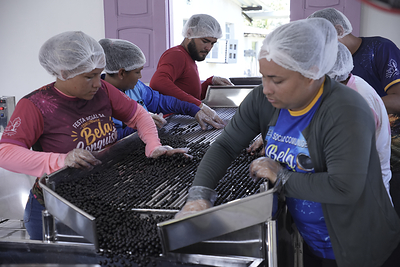
TEFÉ, Brazil, Sept. 10, 2026 /PRNewswire/ — A remote community in the Brazilian Amazon is using solar power to unlock a long-planned açaí processing business, creating new opportunities to increase local incomes while supporting livelihoods that depend on a healthy Amazon rainforest.
In Bela Conquista, located in the Catuá-Ipixuna Extractive Reserve in Amazonas State, a solar-battery mini-grid (50 kWp PV, 165 kWh storage) will provide the reliable electricity needed to operate the community’s açaí processing facility. Until now, an unstable and diesel-based electricity supply had prevented the facility from operating, contributing to fruit losses, limiting production and restricting how much açaí pulp can be processed in the facility. Bela Conquista is the first proof point for a model that partners aim to scale to 20 pilots in the next 2-3 years. Across those projects, the initiative is projected to reach up to 25 communities in the heart of the Brazilian Amazon. It will enable different bioeconomy businesses such as acaí production, fishing, agriculture and fruit processing. The solar battery installations will provide annually up to 1Gwh of solar power and avoid 255K liters of diesel and 680 tons of CO2 .
The installation is part of a partnership between the Foundation for Amazon Sustainability (FAS), Global Energy Alliance for People and Planet (Global Energy Alliance) and Brazil’s Ministry of Mines and Energy. The initiative aims to demonstrate how reliable electricity can support economic opportunity and sustainable development in remote Amazon communities.
The project comes as Brazil works to close one of its hardest remaining energy-access gaps. Nearly one million Brazilians still live without electricity, more than 95 percent of them in the Amazon, while another two million rely on polluting and unreliable diesel power. In remote communities like Bela Conquista, renewable energy can provide more reliable power while creating new opportunities for local businesses, essential services and household incomes.
The Bela Conquista processing facility has been envisioned since 2017. It grew out of residents’ ambition to capture more value from locally produced açaí, improve access to markets and increase economic opportunities for local families. By enabling more of the fruit to be processed locally, the project offers a tangible example of how clean energy can strengthen the Amazon bioeconomy. With the minigrid and a stable energy supply, the facility can produce 36K liters of açai annually.
“The biggest bottleneck we faced in getting the business to operate was the lack of reliable energy. We had many problems with the existing grid because of the conditions of the distribution line, and the electricity reaching the facility was not sufficient to power all the machines,” explains Daniel Gama, a resident of Bela Conquista and president of the processing facility project.
“Now, we will be able to produce more açaí and will no longer face the same difficulties with açaí losses because we will have energy from the solar panels. We will be able to purchase a larger volume of fruit, have more product to process at the facility, and increase families’ income, says Luciana Sena, a community resident and deputy secretary of the açaí processing facility.
The project has also supplied energy to essential community infrastructure, including the school, community center and kitchen, as well as the community water well.
Turning energy access into economic opportunity
Alongside the solar mini-grid, the partnership GEA-FAS includes training for community members to manage, operate and maintain the new energy assets. Once trained, community members will take responsibility for managing the system and factory supporting local ownership and the long-term sustainability of the initiative.
“Community members will receive all the training and capacity-building activities planned since the project was designed. They will be responsible for managing, operating, and maintaining the assets implemented in their communities,” says Thiago Carvalho, Renewable Projects Leader at FAS.
“This is a remarkable project in which we intend to use energy as a driver of prosperity, creating the conditions for communities to remain in the territories where they have chosen to live, with quality of life and opportunities to generate income, while also contributing to the conservation of the Amazon rainforest, an asset of fundamental importance to the entire world,” says Luisa Valentim, Brazil Delivery Lead at Global Energy Alliance.
For Bela Conquista, residents also see the processing facility as a way to strengthen livelihoods based on resources the forest already provides.
“Our hope is that people will reduce deforestation for planting and farming and that we can increasingly rely on extractive activities, taking from the forest what it already offers us. We have Brazil nuts here, as well as açaí, which is our main product today. We can harvest from nature without deforesting and without harming our forest,” says Luzia Pinto, one of the community’s matriarchs.
“Bela Conquista is a community that serves as a reference and deserves to be seen firsthand by everyone who hopes for a fairer and more sustainable Amazon. It shows that it is possible. The great challenge is to multiply examples like this one, and so many others that we have had the privilege of supporting and strengthening throughout our history,” says Virgilio Viana, General Superintendent of FAS.
Extending the model across remote Amazon communities
The Luz na Floresta project is implemented by the Foundation for Amazon Sustainability (FAS), Global Energy Alliance for People and Planet (Global Energy Alliance) and Brazil’s Ministry of Mines and Energy. It aims to promote sustainable local development and economic autonomy in communities in the Brazilian Amazon. More than 600 families are expected to benefit through the productive use of energy and the development of solutions that can help inform public policies for expanding energy access and economic opportunity in remote territories.
The areas covered by the project include the Serra da Moça Indigenous Territory (Serra da Moça Village), in Boa Vista, Roraima; the Nossa Senhora do Livramento Community (Uixi), in the Piagaçu-Purus Sustainable Development Reserve, in Beruri, Amazonas; the Bela Conquista Community, in the Catuá-Ipixuna Extractive Reserve, in Tefé, Amazonas; the Tamaniquá Community, in the Middle Solimões region, Amazonas; and the villages of Santa Maria do Boiaçu, Cachoeirinha, and Caicubi, in the Lower Rio Branco region, Roraima.
Across the communities served, the project aims to achieve 80% energy availability and increase acai production revenue more than 3x.
About the Foundation for Amazon Sustainability
The Foundation for Amazon Sustainability (FAS) is a nonprofit civil society organization that works to promote sustainable development in the Amazon. Its mission is to contribute to the conservation of the biome, improve the quality of life of Amazonian communities, and enhance the value of the standing forest and its biodiversity.
About Global Energy Alliance for People and Planet
Global Energy Alliance for People and Planet is a global nonprofit that builds public, private and philanthropic partnerships to accelerate clean energy and economic opportunity. Founded in 2021 by The Rockefeller Foundation, IKEA Foundation and Bezos Earth Fund, we build the technical, financial and institutional foundations that make clean energy investable and scalable across emerging economies. Our work is anchored in two mutually reinforcing global pillars that together address the market fragmentation that has historically slowed down progress on energy access and economic development. Grids of the Future strengthens energy supply through AI-enabled, renewables-ready power grids. Powering Opportunity builds demand, helping people harness clean energy to power businesses, create jobs and drive economic growth. Together, these pillars create a reinforcing cycle of abundant energy and economic opportunity. With 130 projects across Africa, Asia and Latin America and the Caribbean, we are on track to reach 91 million people with clean energy, create or improve more than 3 million jobs and prevent nearly 300 million tons of carbon emissions. For more information, please visit www.energyalliance.org and follow us on LinkedIn.
 View original content to download multimedia:https://www.prnewswire.com/news-releases/fas-and-global-energy-alliance-bring-solar-power-to-the-brazilian-amazon-turning-acai-into-economic-opportunity-and-offering-a-model-for-remote-communities-302875095.html
SOURCE Global Energy Alliance for People and Planet


