
A-1 Fence Expands Layered Integrated Perimeter Security System for India’s Critical Sites
The approach combines electric fencing, fence-mounted intrusion detection and crash-rated bollards for power, oil and
Press Release Disclaimer: This is a press release distributed through the XPR Media network. It has not been independently verified by our newsroom.
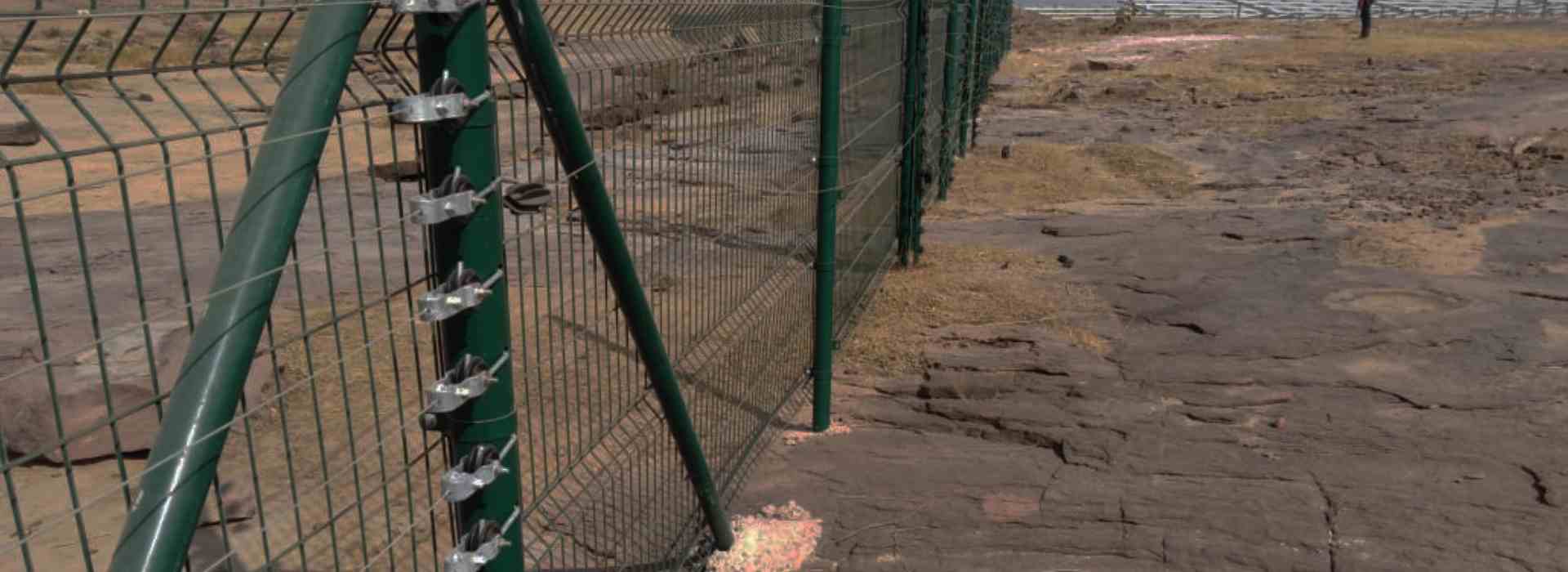

The approach combines electric fencing, fence-mounted intrusion detection and crash-rated bollards for power, oil and gas, data centre and defence sites.
MUMBAI, MAHARASHTRA, INDIA, October 14, 2026 /EINPresswire.com/ — A-1 Fence Products Pvt. Ltd., a Mumbai-based perimeter security manufacturer founded in 1998, has expanded its offering for India’s critical infrastructure with a layered perimeter security approach. The approach brings three protective layers into a single design: electric fencing to deter intruders, fence-mounted sensors to detect them, and crash-tested bollards to stop hostile vehicles. It is aimed at power plants, oil and gas facilities, data centres and defence sites, where a single fence line is no longer treated as enough.
Security planning for high-risk sites commonly follows a simple sequence: deter, detect, delay and respond. An unmonitored fence can be cut without anyone noticing. A sensor without a physical barrier raises an alarm but buys little time. Neither stops a truck driven at a gate. A-1 Fence’s approach assigns a specific product to each of these jobs and engineers the layers to work together on one perimeter.
Demand for monitored perimeters in India is growing. A November 2022 report by Market Research Future forecast that India’s perimeter intrusion detection and prevention market would reach USD 655.37 million by 2030, growing at a compound annual rate of 11.26 percent.
Layer one: deter
The first layer is an electric fence, installed on top of a boundary wall, on an existing mesh fence or as a free-standing barrier. A-1 Fence electric fencing systems deliver a pulsed shock of 5,000 to 9,000 volts at 4 joules per zone. Each pulse lasts 0.3 milliseconds and repeats every 1.2 seconds, so the shock deters without holding on to the person who touches it. The energiser raises an alarm when the wire is cut, shorted or earthed. Solar-powered versions run without a grid connection, which suits remote sites such as solar parks and pipeline routes.
Layer two: detect
The second layer is a perimeter intrusion detection system mounted on the fence itself. A-1 Fence supplies vibration sensors (Liminal-K), fibre-optic sensing (Liminal-F) and compact surveillance radar for open ground. The sensors identify cutting, climbing and tampering, and report the zone in which the attempt took place. Security teams can then send a response to the right section of the boundary instead of patrolling all of it. Fibre-optic sensing can also be added to existing chain link, weld mesh and electric fences.
Layer three: stop vehicles
The third layer addresses vehicle-borne threats at gates, building frontages and access roads. The A-1 Alcazar range of crash rated static bollards is rated to ASTM F2656 M50 P1, the United States test standard for vehicle security barriers. In that test, a 6,800 kg truck travelling at 50 mph (80 km/h) is stopped with less than one metre of penetration. The bollards need a foundation only 450 mm deep, which allows them to be installed where buried cables and pipes would otherwise rule out deep excavation. For entry points where vehicles must pass, the A-1 Alcazar range also includes a hydraulic road blocker, an anti-vehicle wire rope barrier and a crash beam barrier.
Built on defence and conservation projects
A-1 Fence has supplied more than 200 km of fencing for the Line of Control, together with an integrated surveillance system for the Indian Army. That system combines seismic sensors, radar, tunnel detection, thermal and optical cameras, fence-mounted vibration sensors and command-and-control software. In 2022 the company reported that the system had operated continuously for two and a half years across plains, waterlogged ground and high-altitude, snowbound terrain.
The same layered thinking has been applied in conservation. At Kuno National Park in Madhya Pradesh, A-1 Fence installed a hybrid fence that pairs its Honeycomb Fence mesh with an electric layer for the cheetah enclosures. At Satpura National Park, the company installed ISI-marked Honeycomb Fence to reduce human-wildlife conflict along the forest boundary.
Where the layers apply
At power plants and substations, the main risks are equipment theft and sabotage, so the design centres on an anti-climb fence with an electric top layer and zone-based detection. At oil and gas sites, long pipeline corridors and refinery boundaries call for solar-powered electric fencing and fibre-optic sensing that can cover long distances from a single control point. At data centres, where a vehicle attack on the building is a recognised risk, crash-rated bollards and road blockers protect the frontage while the fence line is monitored. At defence and paramilitary sites, the layers are combined with radar and cameras for continuous surveillance in harsh terrain.
“A fence on its own tells you where the boundary is. It doesn’t tell you when someone is crossing it, and it won’t stop a vehicle,” said [NAME], [TITLE] at A-1 Fence. “Customers in power, oil and gas and defence are asking for the whole chain: deter, detect and stop. Because we design and make all three layers ourselves, they work together from the first drawing, and one team is accountable for the entire perimeter.”
Each project starts with a site survey and a review of approach routes, likely threats and existing infrastructure. A-1 Fence then designs the layout, manufactures and coats the fencing and barriers, installs the system and provides after-sales support. According to the company, it operates six manufacturing facilities, four in India and two in Buraimi, Oman, and Dubai, UAE, and has supplied fencing to projects in more than 50 countries.
About A-1 Fence
A-1 Fence Products Pvt. Ltd. was founded in 1998 in Mumbai and manufactures perimeter security fencing, gates, hostile vehicle mitigation barriers and intrusion detection systems. Its product range includes weld mesh and anti-climb fencing, electric fencing, fibre-optic and vibration-based intrusion detection, and the A-1 Alcazar range of crash-rated bollards, road blockers and barriers. The company serves defence, government, energy, infrastructure, industrial and residential customers in India and abroad. More information is available at https://www.a-1fenceproducts.com
Kartik
A-1 Fence Products Company
+91 80 6216 0407
HCIS Compliant A-1 ALCAZAR STATIC BOLLARDS – ASTM F2656 M50 P1
Legal Disclaimer:
EIN Presswire provides this news content “as is” without warranty of any kind. We do not accept any responsibility or liability
for the accuracy, content, images, videos, licenses, completeness, legality, or reliability of the information contained in this
article. If you have any complaints or copyright issues related to this article, kindly contact the author above.

Media gallery


