Collision Center 1 Golden Valley Explains How an Auto Body Shop Evaluates Collision Damage
Golden Valley, MN - October 06, 2026 - PRESSADVANTAGE - Collision Center 1 Golden Valley is publishing consumer
Press Release Disclaimer: This is a press release distributed through the XPR Media network. It has not been independently verified by our newsroom.

Golden Valley, MN – October 06, 2026 – PRESSADVANTAGE –
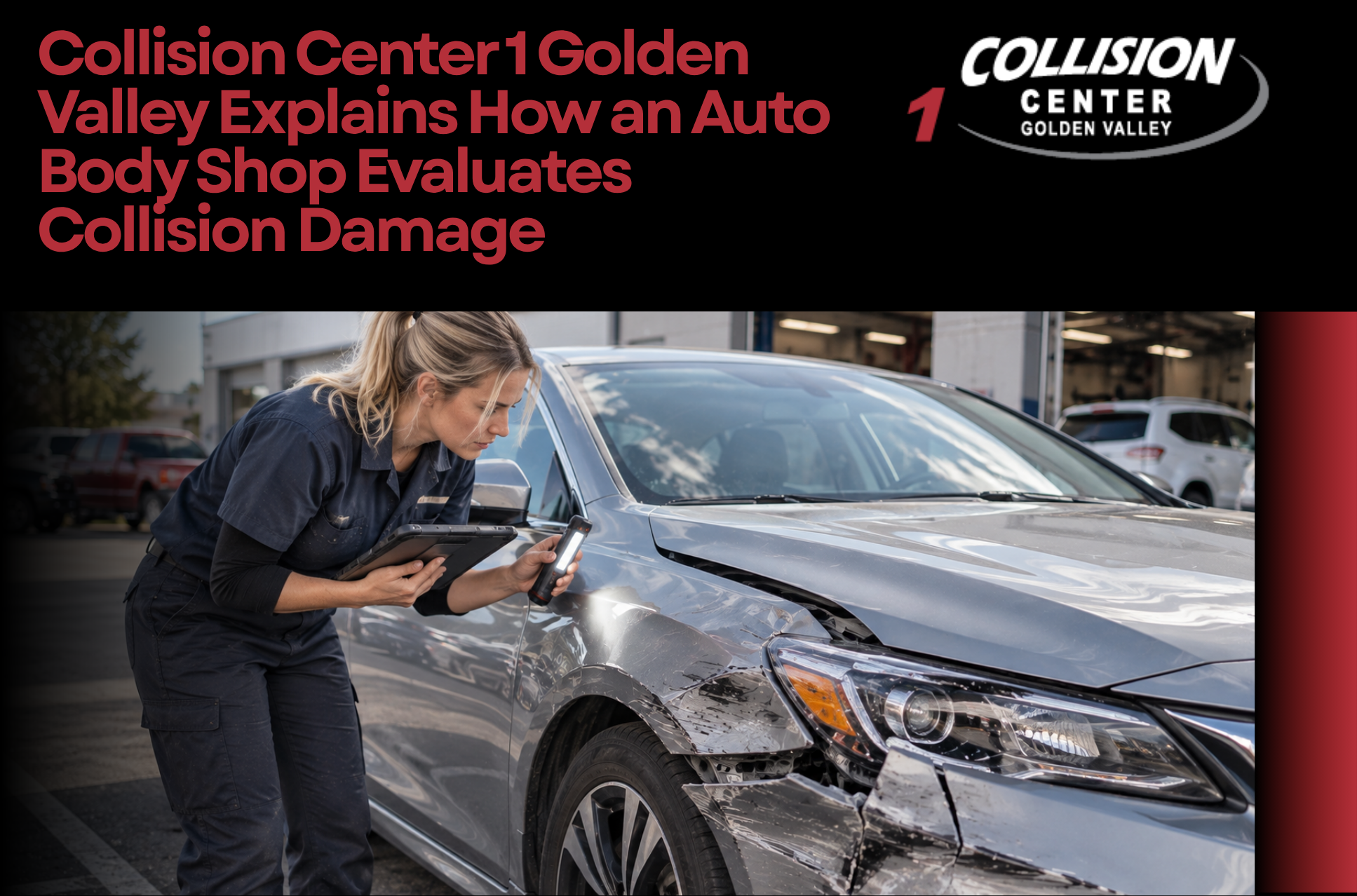
Collision Center 1 Golden Valley is publishing consumer guidance that outlines a five-step framework auto body shops can use to evaluate collision damage before a repair plan is developed. The September resource focuses on documenting visible damage, checking fit and function, determining when additional access is needed, evaluating repair or replacement options, and identifying vehicle-specific procedures that may apply.
The guidance is intended to show drivers what can happen between the initial inspection of a damaged vehicle and the start of physical repairs. Information about the Golden Valley facility is available through the Collision Center 1 Golden Valley location page.
The first step is documenting visible collision damage. Dents, scratches, cracked bumper covers, broken lamps, displaced panels, and damaged trim can help establish where an impact occurred and which surrounding areas may need closer attention.
The visible damage provides a starting point rather than a complete diagnosis. A front-corner impact, for example, may visibly affect a bumper and fender while also making the lamp, bumper attachments, liner, and neighboring components relevant to the evaluation.
The second step is checking how affected components fit and operate. Technicians can review panel gaps around doors, hoods, fenders, bumpers, trunk lids, and liftgates for changes following the collision.
Operation can provide additional information. A door that becomes difficult to close may lead technicians to examine the door along with hinges, latches, attachment points, and the surrounding opening. Similar evaluation can apply when a hood, trunk, or liftgate no longer operates as it did before the accident.
These observations do not automatically establish the severity of the damage. They help identify where additional inspection may be appropriate.
The third step is determining whether technicians need better access to the affected area. Bumper covers, liners, trim, lamps, interior components, and other parts can sometimes limit visibility of attachment points and adjoining areas.
When necessary, disassembly can provide that access. It does not presume additional damage exists. Instead, removing applicable components allows technicians to document conditions that could not be fully observed during the initial exterior inspection.
This also explains why an initial estimate may change. If additional collision-related damage becomes visible after access improves, the repair plan can be updated with the related parts, labor, or procedures.
The fourth step is deciding which damaged components can be repaired and which require replacement. Through the auto body repair process, technicians can consider the condition, material, location, and applicable repair information for each affected component.
Not every damaged panel requires replacement. Some components may be repairable, while the condition or repair limitations of others may make replacement appropriate.
Vehicle construction can influence this decision. Modern vehicles can incorporate steel, high-strength steel, aluminum, plastics, composites, adhesives, welds, rivets, and other joining methods. Repair methods can therefore vary by vehicle and component.
The fifth step is identifying vehicle-specific procedures associated with the repair. Cameras, radar units, parking sensors, wiring, and other electronic components can be located in collision-prone areas such as bumpers, grilles, mirrors, and lamps.
The presence of this equipment does not mean every collision requires diagnostic or calibration procedures. Requirements depend on the individual vehicle, affected components, work being performed, and applicable manufacturer repair information.
Structural evaluation can follow the same principle. Visible exterior damage does not by itself establish structural damage. When the impact location or documented conditions indicate that additional evaluation is appropriate, relevant structural or mounting areas can be examined and measured when necessary.
Once the affected components and repair requirements are understood, the collision repair process can move from evaluation into repair planning, body work, component replacement when required, refinishing, reassembly, and final review.
For drivers, the September resource reduces collision damage evaluation to a practical sequence: document what can be seen, check what changed in fit or operation, improve access when necessary, determine what can be repaired or replaced, and identify procedures that apply to the specific vehicle.
The central takeaway is that an auto body damage evaluation is intended to establish what was actually affected before the repair plan is finalized. A visible dent, cracked bumper, or displaced panel may identify where the evaluation begins, while the documented condition of the complete affected area determines how the repair proceeds.
Collision Center 1 Golden Valley is located at 900 Florida Ave S, Golden Valley, MN 55426. The facility provides auto body and collision repair services for Golden Valley-area drivers as part of Collision Center 1.
###
For more information about Collision Center 1 Golden Valley, contact the company here:
Collision Center 1 Golden Valley
Jerald Stiele
(763) 541-9727
layres@collisioncenter1.com
900 Florida Ave S, Golden Valley, MN 55426