
Top Casters Manufacturer Jiaxing Xingjie Advances Mobility Solutions
JIAXING, ZHEJIANG, CHINA, October 28, 2026 /EINPresswire.com/ -- Jiaxing Xingjie Machinery Co., Ltd. is expanding its
Press Release Disclaimer: This is a press release distributed through the XPR Media network. It has not been independently verified by our newsroom.

JIAXING, ZHEJIANG, CHINA, October 28, 2026 /EINPresswire.com/ —
Jiaxing Xingjie Machinery Co., Ltd. is expanding its role in the global mobility equipment market through a broad portfolio of casters, wheels, shopping trolleys, and material-handling products. As manufacturers, retailers, warehouses, healthcare facilities, and logistics operators seek practical solutions for moving equipment and goods, the demand for reliable mobility components continues to shape the caster industry. With manufacturing operations connected to the Xingteng Group, Jiaxing Xingjie Machinery Co., Ltd. combines product development, tooling, production, and export services to support customers across multiple industrial and commercial sectors.
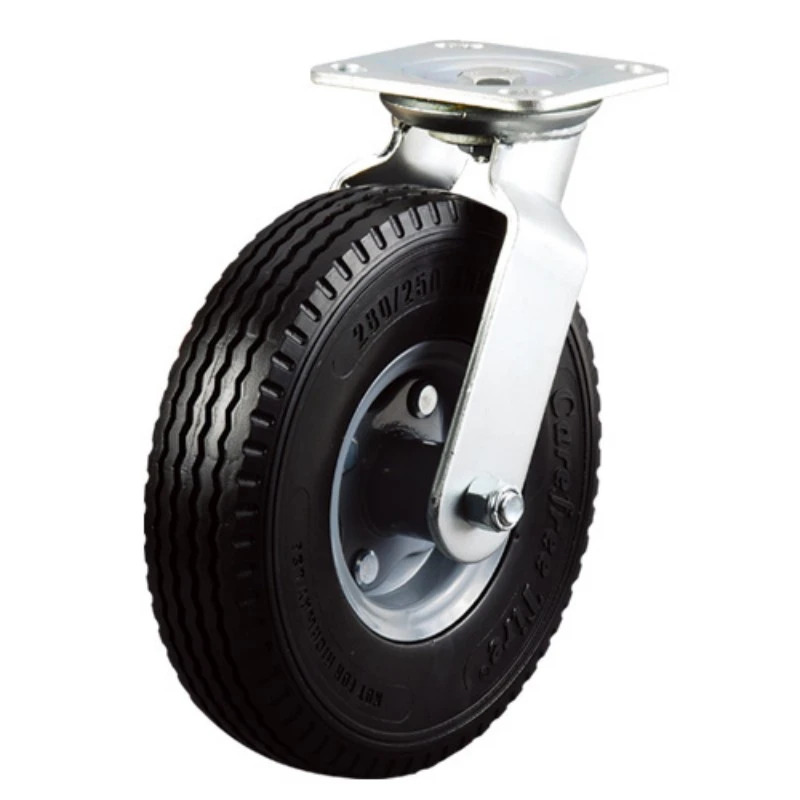
Casters are small components with an important role in the operation of mobile equipment. Installed beneath carts, trolleys, cabinets, machinery, and other structures, they enable movement while helping users maneuver loads through different working environments. Depending on their design, casters may provide swivel movement, directional stability, braking, shock absorption, or other functions suited to specific applications. Selecting the right caster requires consideration of load capacity, wheel material, mounting style, floor conditions, operating temperature, and expected frequency of use.
Jiaxing Xingjie Machinery Co., Ltd. presents its business as a manufacturer and supplier of caster wheels and related mobility products. Its official website identifies three core product lines: casters, Single Wheels, and Trolley Accessories. The wider portfolio also includes shopping trolleys, logistics carts, shopping baskets, and customized caster solutions. This combination allows the company to address the needs of buyers seeking individual mobility components as well as businesses sourcing complete carts and related equipment.
The caster market serves a wide range of industries, from retail and warehousing to manufacturing, furniture, and medical equipment. Each environment presents different requirements. A shopping trolley must move smoothly through aisles and remain manageable for customers, while an industrial cart may need to carry heavier loads across a factory floor. Medical equipment may require quiet movement, dependable braking, and easy cleaning. These differences make product selection and application-specific design important considerations for manufacturers and distributors.
Manufacturing Experience and Product Development
According to its company profile, Jiaxing Xingjie Machinery Co., Ltd. was established as a dedicated foreign trade company in 2014, building on the manufacturing history of the Xingteng business that began in 1997. The group has developed from an early plastics operation into a manufacturer of caster wheels, shopping cart components, and related mobility equipment. Its production activities include mold development, injection molding, metal stamping, welding, riveting, and assembly.
These manufacturing processes support different stages of caster production. Injection molding can be used to produce plastic components and wheel-related parts, while stamping and welding help form metal brackets and supporting structures. Assembly operations bring together wheels, bearings, brackets, fasteners, and other components to create finished casters. The exact process depends on the product’s construction, materials, and intended application.
The company’s official website describes a manufacturing base with more than 30,000 square meters of factory space, over 110 sets of manufacturing equipment, and stated annual capacity exceeding 10 million casters. These figures reflect the scale reported by the company and provide context for buyers evaluating its manufacturing resources. Customers considering a particular order should confirm current production capacity, lead times, and available specifications directly with the supplier.
Tooling and product development are also relevant to customized mobility components. Different equipment designs may require different mounting plates, stem configurations, wheel diameters, tread materials, and load ratings. Buyers may need to provide drawings, samples, installation dimensions, or operating requirements so that a manufacturer can determine whether an existing product is suitable or whether a customized solution is necessary.
Jiaxing Xingjie Machinery Co., Ltd. promotes OEM and ODM services for customers seeking customized casters and related products. Its website describes customization options involving wheel materials, sizes, mounting arrangements, load ratings, and packaging. Such options can be relevant to equipment manufacturers and distributors who require components that match their own products or brand specifications.
Caster Design and Application Requirements
A caster’s design affects how it performs under load and during movement. Swivel casters allow a wheel assembly to rotate around a vertical axis, improving maneuverability in confined spaces. Rigid casters maintain a fixed direction and can help support straight-line travel. Some equipment uses a combination of swivel and rigid casters to balance steering control and directional stability. Braked versions can help prevent unintended movement when equipment is stationary.
Wheel material is another important factor. Polyurethane, thermoplastic rubber, polypropylene, nylon, rubber, and cast iron are among the materials used in different caster applications. Each material has different characteristics relating to rolling resistance, floor protection, noise, wear, load support, and resistance to environmental conditions. The appropriate choice depends on the surface and operating environment as well as the weight being carried.
For example, polyurethane wheels are frequently considered for applications where a balance of wear resistance, rolling performance, and floor protection is required. Nylon and polypropylene wheels may be suitable for particular hard-floor or industrial applications, while rubber and thermoplastic rubber can be selected where softer contact or noise reduction is a priority. These are general material considerations rather than universal rules; the final selection should be based on the specific product’s technical specifications.
Load calculation is equally important. Buyers should consider the total weight of the equipment and its maximum payload, then account for how that weight is distributed across the installed casters. Uneven floors, turning forces, thresholds, and dynamic movement can create loads that differ from a simple stationary calculation. A suitable safety margin and confirmation of the manufacturer’s rated capacity can help reduce the risk of premature wear or component failure.
Jiaxing Xingjie Machinery Co., Ltd. organizes its caster offerings around factors such as application, load capacity, mounting type, wheel material, and size. Its industrial caster listings include medium-duty models intended for workshop carts, production-line trolleys, material-handling equipment, and light industrial machinery. The company also presents options in several wheel diameters and materials, enabling buyers to compare products against their requirements.
Single Wheels for Replacement and Equipment Assembly
Single Wheels form a distinct category within the company’s published product system. While complete casters generally include a wheel and supporting swivel or rigid bracket, a single wheel may be purchased separately for replacement, maintenance, or integration into a customer’s own equipment design. The suitability of a replacement wheel depends on its dimensions, axle arrangement, bearing configuration, material, and load requirements.
For equipment manufacturers, separate wheels can provide flexibility when designing a custom mobility assembly. For maintenance teams and distributors, they may offer an option for replacing worn components without replacing the entire caster unit, provided the wheel is compatible with the existing assembly. Buyers should verify the wheel diameter, width, axle or bore dimensions, bearing type, and material before ordering.
The company’s website identifies Single Wheels as one of its three principal product lines alongside casters and trolley accessories. Its broader product system includes wheel materials such as polyurethane, thermoplastic rubber, nylon, polypropylene, rubber, cast iron, and polyurethane on cast iron. These materials serve different operating needs, so the precise product specification remains central to the selection process.
Wheel performance can be influenced by bearing design as well as tread material. Plain bearings, ball bearings, and roller bearings may be used in different wheel assemblies, depending on the intended load and operating conditions. Buyers may also need to consider rolling resistance, noise, temperature exposure, and whether the wheel will be used on smooth floors, uneven surfaces, or areas exposed to moisture and contaminants.
For replacement applications, dimensional compatibility is particularly important. A wheel that appears similar to the original may not fit the existing bracket or axle correctly. An incorrect bearing or bore arrangement can also affect installation and movement. Providing a drawing, sample, or complete equipment specification can help the supplier identify a suitable option.
Trolley Solutions for Retail and Material Handling
Trolleys are another important part of Jiaxing Xingjie Machinery Co., Ltd.’s product portfolio. Shopping trolleys are used in supermarkets, retail stores, and other commercial settings, while logistics carts help move goods through warehouses, workshops, and distribution facilities. Their performance depends on the combined design of the frame, handles, wheels, load-bearing structure, and other components.
The company’s product catalog includes different shopping trolley styles, such as American, European, Asian, Australian, German, and Japanese configurations, along with plastic shopping trolleys and foldable models. Its wider range also includes shopping baskets and logistics carts. These product categories reflect the variety of cart formats required by retailers and material-handling businesses in different markets.
Trolley design involves balancing carrying capacity, maneuverability, stability, storage requirements, and user convenience. Retail shopping carts need to navigate aisles and turn within limited spaces, while warehouse carts may prioritize load capacity and durability. Foldable trolleys can be useful where storage space is limited, whereas larger carts may be selected for higher-volume transport tasks.
Casters are central to trolley operation because they affect starting force, steering, rolling smoothness, noise, and stability. Wheel diameter, tread material, bearing type, swivel construction, and braking features can all influence the experience of moving a loaded cart. A suitable combination depends on the cart’s weight, payload, floor surface, and operating frequency.
Jiaxing Xingjie Machinery Co., Ltd. supplies caster products for shopping carts, logistics trolleys, industrial equipment, furniture, and medical applications. Its related trolley and accessory categories allow customers to consider both the mobility components and the equipment they support. Buyers should confirm product availability and specifications for their target market and application before finalizing orders.
Quality Control and Product Reliability
Quality management is an important part of caster manufacturing because the finished product combines materials and components that must work together under load. Wheel hardness, bracket strength, bearing performance, swivel movement, fastening quality, and surface treatment can influence product reliability. Inspection procedures help manufacturers identify variations and confirm that products meet established specifications.
Jiaxing Xingjie Machinery Co., Ltd. describes quality-control activities that include load-capacity, fatigue, braking, and salt-spray testing. The company’s published information also references ISO 9001:2015, TUV product certification for certain shopping cart caster products, and RoHS 2.0 compliance. Buyers should request current certificates and test documentation to verify their scope, validity, and applicability to the exact product being purchased.
Different applications may require different forms of verification. For a shopping cart caster, buyers may focus on rolling performance, load capacity, braking function, and durability during repeated use. Industrial applications may place greater emphasis on load ratings, impact resistance, wheel material, and performance under demanding working conditions. Products used in medical or specialized environments may have additional requirements relating to noise, cleaning, or electrical properties.
Manufacturing consistency is also relevant to repeat purchasing. Distributors and equipment manufacturers often expect products supplied under the same model or specification to remain consistent in dimensions, material, finish, and function. Traceability, process controls, and clear product identification can help support quality management across orders.
Before placing a bulk order, buyers may wish to confirm inspection methods, product documentation, packaging, warranty terms, sample availability, and the process for handling nonconforming products. These details are particularly useful when a caster or wheel is integrated into a larger piece of equipment and a component discrepancy could affect assembly or operation.
Customization and International Supply
The global caster market includes equipment manufacturers, wholesalers, retailers, distributors, and businesses seeking private-label or OEM products. Their requirements may vary by industry, region, and application. Some customers need standard components available in regular quantities, while others require a specific combination of wheel material, bracket type, dimensions, load rating, or branding.
Jiaxing Xingjie Machinery Co., Ltd. describes an OEM/ODM process that begins with application assessment and solution design, followed by quotation, sampling, testing, production, quality inspection, and delivery. This approach can help buyers communicate the intended use and technical requirements before committing to a production order. The precise scope of customization, tooling costs, lead times, and minimum quantities should be confirmed directly with the company.
International sourcing also involves logistics, documentation, and communication. Buyers may need to coordinate packaging specifications, shipment schedules, export requirements, and delivery terms with the supplier. For customized products, approved drawings and samples can help establish a common reference for production and inspection.
The company’s website states that its products are exported to international markets and that it provides support for global customers. Buyers evaluating a supplier should verify current export arrangements and ensure that the requested products meet the applicable requirements of the destination market.
As industries continue to depend on mobile equipment for retail, warehousing, manufacturing, and healthcare, casters and wheels remain essential components in everyday operations. Product performance depends on selecting the right design, material, mounting system, and load capacity for each application. Manufacturers that combine production capabilities with technical support and a broad product portfolio can help customers address these different requirements.
Jiaxing Xingjie Machinery Co., Ltd. brings together casters, Single Wheels, Trolley products, and related accessories within its broader mobility equipment business. Its manufacturing background, product range, and customization services provide a foundation for serving distributors and equipment manufacturers with different sourcing needs. For prospective buyers, direct technical consultation and specification verification remain important steps toward selecting suitable products.
About Jiaxing Xingjie Machinery Co., Ltd.
Jiaxing Xingjie Machinery Co., Ltd. is a China-based caster and mobility equipment manufacturer located in Jiaxing, Zhejiang Province. Established as a dedicated foreign trade company in 2014, it works with the Xingteng Group, whose manufacturing history dates back to 1997. The group describes its capabilities as including research and development, mold making, injection molding, stamping, welding, assembly, and product testing.
Its product portfolio includes industrial casters, shopping cart casters, Single Wheels, shopping trolleys, logistics carts, shopping baskets, and trolley accessories. The company offers a range of wheel materials, mounting styles, and load capacities, with OEM and ODM services available for selected product requirements. Its published quality information references ISO 9001:2015, TUV certification for certain shopping cart caster products, and RoHS 2.0 compliance; customers should verify current documentation and product-specific applicability.
For more information about its caster products, trolley solutions, and customization services, visit www.cnxingjie.com.
Address: No.76, Xiangxi Road, Nanhu District, Jiaxing, Zhejiang Province, China
Official Website: https://www.cnxingjie.com/
Ilynn Wong
Jiaxing Xingjie Machinery Co., Ltd.
xtcaster5@jxcaster.com
Legal Disclaimer:
EIN Presswire provides this news content “as is” without warranty of any kind. We do not accept any responsibility or liability
for the accuracy, content, images, videos, licenses, completeness, legality, or reliability of the information contained in this
article. If you have any complaints or copyright issues related to this article, kindly contact the author above.

Media gallery

